
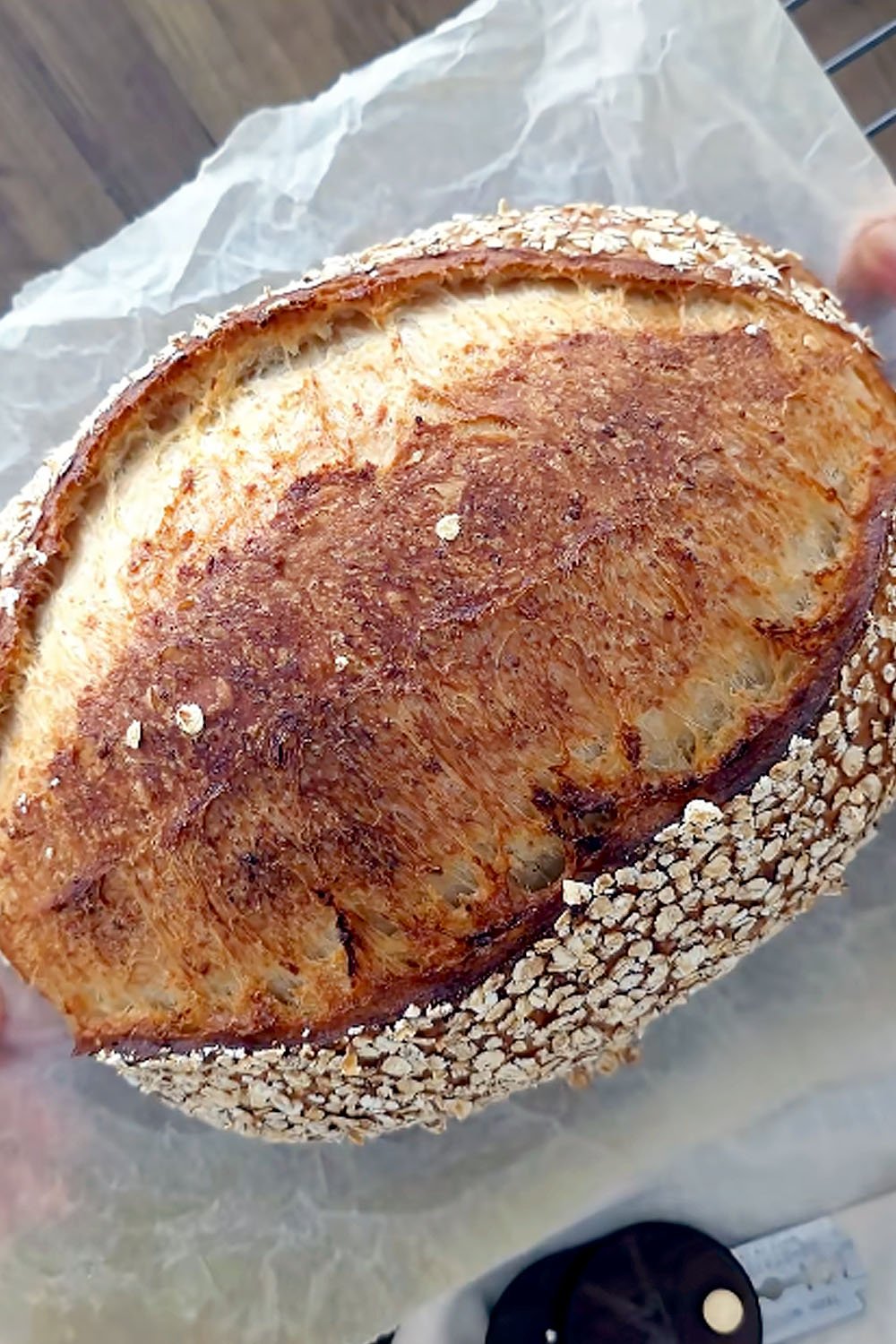
Sweet honey and warm oats turn a basic loaf into something you will crave every single morning. This everyday recipe saves you hours of kneading, so you get fresh bread without spending your whole day in the kitchen.
Sticky honey brings natural sweetness, while rolled oats give every slice a nutty, chewy bite. That simple combination creates a loaf that stays soft for days, without needing any strange store-bought preservatives. Stick around, and you will learn the exact steps for getting a tall, golden loaf every single time.
Why You Will Love This Recipe
- Hands-Off Baking: Your machine does all the heavy kneading and rising work. You just measure the ingredients, press a few buttons, and walk away until the timer goes off.
- Natural Sweetness: Pure honey replaces refined white sugar, giving the crumb a gentle, floral flavor. That sweetness also helps the crust turn a deep, golden brown while it bakes.
- Hearty Texture: Rolled oats soak up the liquids during the mixing cycle, making the center incredibly tender. They also add a subtle, rustic chew that store-bought white bread completely lacks.
- Long-Lasting Moisture: Whole oats hold onto water, keeping your slices soft for days. You will not have to worry about your breakfast toast turning into dry cardboard by Wednesday.
- Simple Pantry Staples: Every single item on the list lives in a normal kitchen cabinet. You can whip up a loaf tonight without making an emergency grocery run.
- No Guesswork: The machine controls the temperature during the rising phase, so your dough gets warm and cozy without any drafty kitchen accidents.
Ingredients
- Warm Water (1 cup): Activates the yeast quickly, getting your rise started on the right foot. Make sure it feels like bathwater, because hot water kills yeast instantly.
- Honey (1/4 cup): Feeds the yeast and sweetens the final crumb all at once. Pour it in first so it does not stick to the measuring cup.
- Butter (2 tablespoons): Softens the texture of the bread and keeps the crust from turning too hard. Cut it into small cubes so the paddle mixes it smoothly.
- Salt (1 and 1/2 teaspoons): Balances out the heavy sweetness from the honey and strengthens the gluten strands. Never skip it, or your loaf will taste flat and bland.
- Bread Flour (3 cups): Builds the strong gluten structure needed for a tall, airy loaf. Do not swap it for cake flour, or your bread will collapse in the pan.
- Rolled Oats (1/2 cup): Adds a nutty flavor and a chewy texture throughout the crumb. Toss them in dry, because the machine will break them down just enough during mixing.
- Active Dry Yeast (2 teaspoons): Creates the gas bubbles that make your dough puff up high. Keep it away from the salt until the machine starts mixing, to protect the living cells.
Steps to Make Honey Oatmeal Bread Machine Recipe (Quick and Easy Guide)
Loading the Pan Correctly
Liquids go into the bottom of the metal bucket first, keeping the yeast dry and happy. Pour in your warm water, followed by the melted butter and sticky honey. Drop your flour right on top of the liquid layer, creating a dry wall to protect the yeast.
Setting the Right Cycle
Slide the metal bucket firmly into the machine until it clicks into place. Select the basic white bread setting on your digital panel, choosing a medium crust color. Press the start button, and listen for the steady hum of the motor beginning its work.
Watching the Initial Mix
The paddle spins around, pulling the dry flour into the wet pool below. Watch through the small glass lid to make sure a smooth dough ball forms quickly. If the mixture looks too dry and powdery, drizzle in a tiny splash of extra water.
Baking and Cooling
The machine beeps loudly once the final baking cycle finishes its countdown. Tip the hot pan upside down, and shake the golden loaf out onto a wire rack. Let it cool completely before slicing, so the steam inside finishes setting the crumb structure.
What to Serve with Honey Oatmeal Bread Machine Recipe
Salted Butter
Thick pats of cold butter melt straight into the warm, toasted surface of your bread. That simple fat melts into the porous crumb, highlighting the natural honey flavor without adding extra sugar.
Fresh Berry Jam
Sweet fruit spreads cut through the hearty, earthy taste of the rolled oats. A bright strawberry or raspberry jam makes your morning slice taste like a bakery pastry.
Creamy Nut Butter
Almond butter or peanut butter adds a protein boost to your morning breakfast routine. The nutty spread clings to the chewy oat bits, keeping you full until lunchtime rolls around.
Sharp Cheddar Cheese
Melt a slice of aged cheddar over toasted honey oat bread for a savory afternoon snack. The salty cheese contrasts with the sweet honey notes, creating a surprisingly good flavor combination.
Storage and Reheating
Countertop Storage
Wrap your cooled loaf tightly in plastic wrap to trap the natural moisture inside. It stays fresh at room temperature for up to four days on your kitchen counter.
Freezing Extra Slices
Slice the entire loaf with a serrated knife before sliding pieces into a freezer bag. Pull out individual slices whenever you want toast, skipping the need to thaw a whole loaf.
Reviving Stale Bread
Pop dry slices into your toaster on a medium setting to bring back a crisp exterior. The inside softens right back up, tasting almost as good as a fresh batch from the oven.
Avoiding the Fridge
Never store your homemade bread inside the refrigerator, because cold air dries out the starches fast. Storing it cold makes the crumb turn crumbly and stale in less than twenty-four hours.
What Makes This Recipe Special
Built-in Oats
Soaking rolled oats directly in the dough softens them up without needing a separate stovetop porridge step. You get a hearty texture in every single bite, without any extra dishes to wash later.
Honey Over Sugar
Natural honey brings complex floral notes that plain white sugar simply cannot match. It reacts with the flour differently, creating a rich brown crust that smells incredible while baking.
Perfect Crumb Structure
Bread flour provides the exact protein level needed to support the heavy oats. Your loaf rises tall and proud, instead of sinking flat in the middle of the pan.
Zero Kneading Effort
The machine handles the physical labor, saving your wrists from getting tired. You walk away with professional bakery results, while the appliance does all the heavy lifting.
Pro Tips for the Best Results
Check the Water Temperature
Use a kitchen thermometer to make sure your water hits around one hundred degrees. Water that feels too hot to your finger will kill the yeast, leaving you with a heavy, flat brick.
Measure Flour Correctly
Flour packs down easily in the bag, leading to dry and crumbly bread. Spoon your flour into the measuring cup instead of scooping it, then level it off flat with a knife.
Clean the Paddle Shafts
Wipe the metal kneading paddles clean after every single baking session. Old dough stuck to the shafts can bake onto the metal, locking the paddle in place for your next loaf.
Listen to the Dough
Stand by the machine during the first five minutes of the mixing cycle. You want a smooth, slightly tacky ball that cleans the sides of the pan without sticking to the walls.
Variations and Substitutions
Maple Syrup Swap
Instead of honey, use pure maple syrup to give the bread a deeper, woodsy flavor profile. The moisture levels match up closely, so your dough texture stays exactly the same.
Adding Sunflower Seeds
Toss a handful of raw sunflower seeds into the machine along with your oats for extra crunch. They toast up nicely during the baking cycle, adding a nutty aroma to your kitchen.
Whole Wheat Blend
Swap out one cup of bread flour for whole wheat flour to add extra fiber. Your loaf will turn out slightly denser, but it gains a wonderful rustic flavor that tastes great with butter.
Milk Liquid Swap
Instead of plain water, use warm whole milk to hydrate the dry ingredients. The milk fats make the crumb softer, giving you a richer sandwich bread texture.
Frequently Asked Questions
Can I Use Quick Oats Instead of Rolled Oats?
Quick oats work fine, but they break down completely during the long mixing cycle. Rolled oats leave nice, visible pieces of texture scattered throughout your finished bread slices.
Is It Okay to Use Active Dry Yeast?
Active dry yeast works wonderfully in standard bread machine cycles. Just make sure you check the expiration date printed on the packet before pouring it in.
Does This Recipe Need Extra Vital Wheat Gluten?
Bread flour contains plenty of natural protein to hold up the heavy oats. You do not need any extra additives to get a tall, beautiful rising loaf.
Can I Program a Delayed Bake Timer?
Delayed timers work great as long as you keep the water away from the yeast. Pour liquids first, flour second, and sink your dry yeast into a tiny well on top.
Does the Butter Need to Be Softened?
Melted or soft butter mixes into the liquid ingredients much smoother than hard fridge blocks. Take your butter out twenty minutes early, or give it a quick zap in the microwave.
Are Leftovers Safe to Eat After Four Days?
Homemade bread lacks artificial preservatives, meaning mold can appear after a few days. Check your loaf for any fuzzy spots, or freeze extra slices early to extend their life.
Does This Dough Require an Initial Proof?
Your machine handles all the rising cycles inside the warm metal bucket automatically. You just load the ingredients, walk away, and wait for the final baking alert to sound.
Can I Bake This in a Regular Oven?
You can use the machine on the dough setting only, then shape it into a loaf pan. Bake it at three hundred fifty degrees until the crust turns golden and sounds hollow.
Final Thoughts
Fresh honey oat bread makes waking up early feel completely worth the effort. Set your machine tonight, and wake up to the best smell in the world.
Honey Oatmeal Bread Machine Recipe
Ingredients
- Warm Water (1 cup)
- Honey (1/4 cup)
- Butter (2 tablespoons)
- Salt (1 and 1/2 teaspoons)
- Bread Flour (3 cups)
- Rolled Oats (1/2 cup)
- Active Dry Yeast (2 teaspoons)
Tools You Need
- Bread machine
- Measuring cups
- Measuring spoons
- Serrated knife
- Wire cooling rack
Steps
- Pour warm water, melted butter, and honey into the bread machine pan.
- Add the bread flour and rolled oats on top of the liquid layer.
- Make a small well in the flour and drop the active dry yeast inside.
- Select the basic white bread setting on your machine and press start.
- Remove the baked loaf immediately and let it cool on a wire rack.