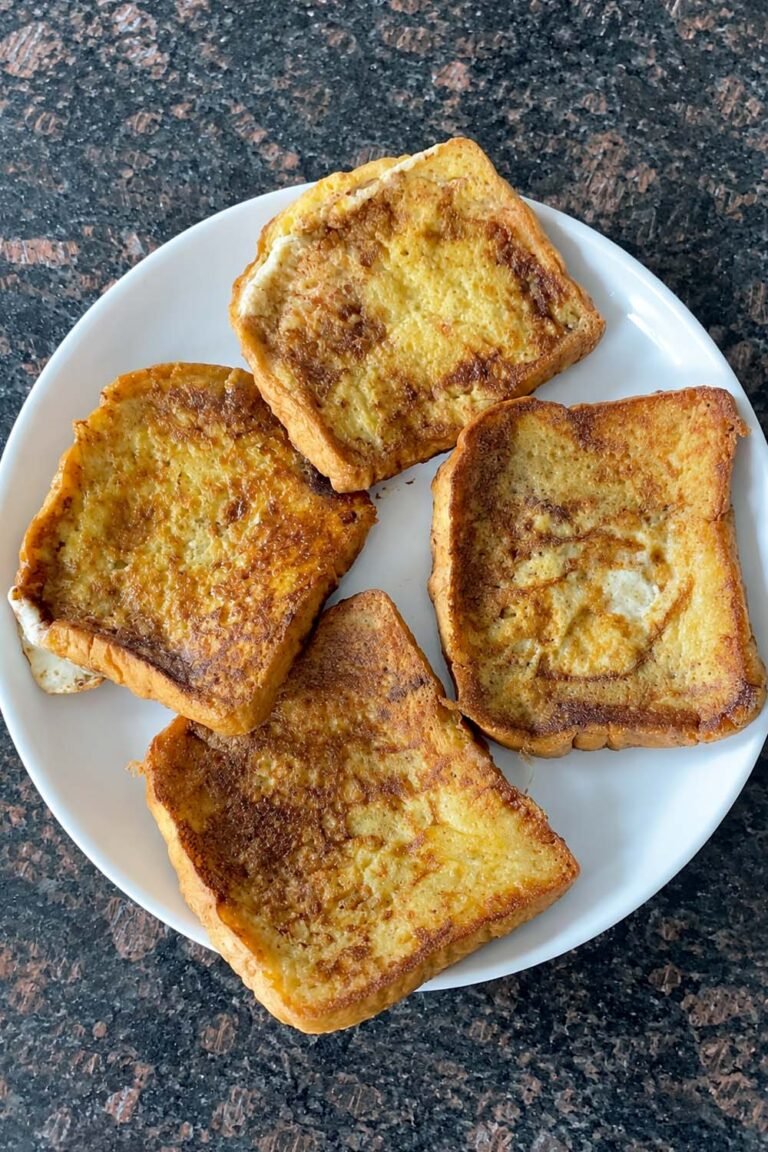

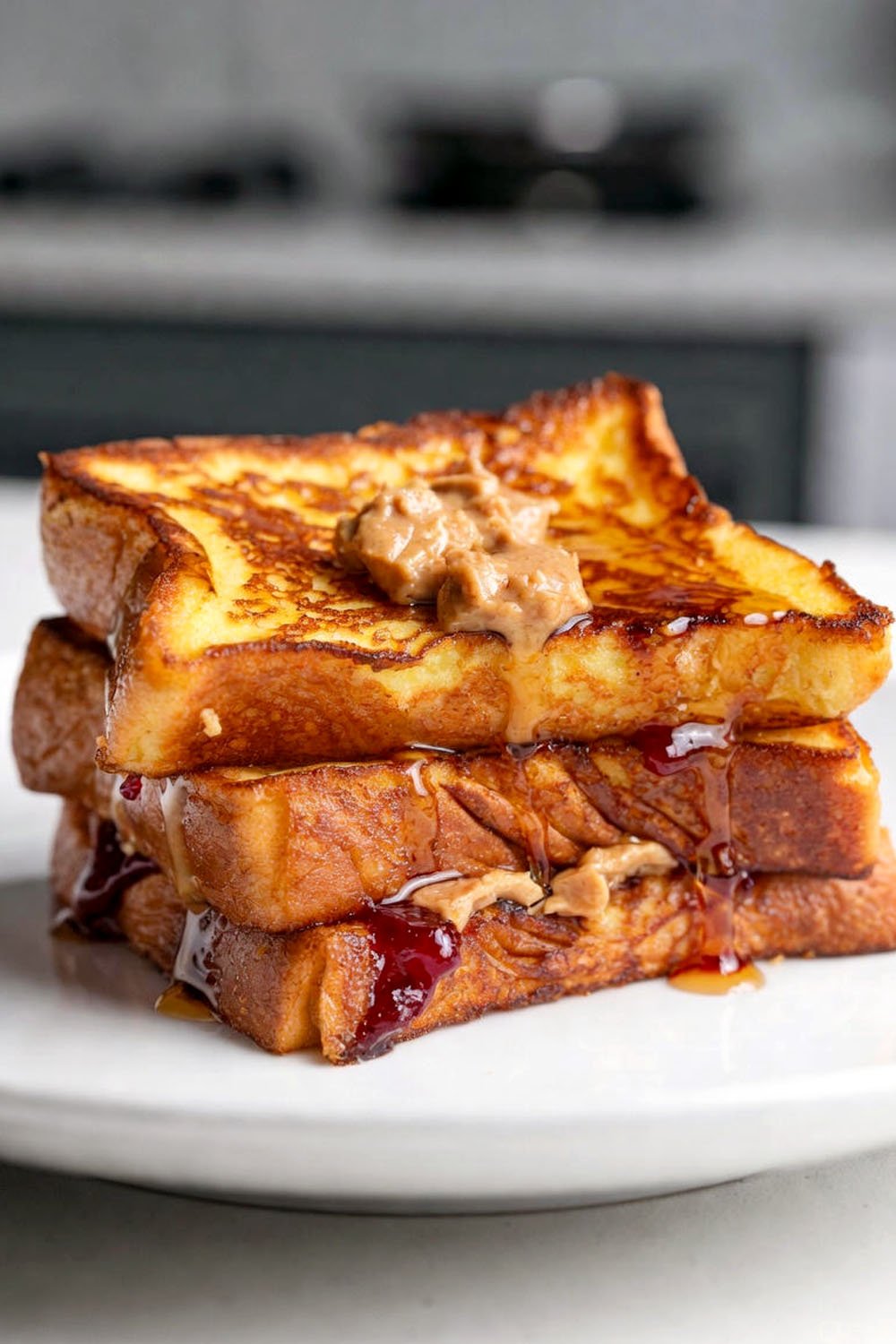
This sweet breakfast is soft, warm, and full of comfort. It mixes the taste of peanut butter and jelly with the rich flavor of French toast. The bread soaks in a simple egg mix, then turns golden in the pan. The filling melts, and every bite feels gentle and kind. This easy guide will help you make it step by step, even if you are new to cooking.
Spread peanut butter and jelly on bread, press the slices together, and dip them in a simple egg and milk mix. Cook slowly in a warm pan until both sides turn golden. Use fresh bread, a nonstick pan, and low heat so the filling does not spill out. Serve with syrup, fruits, or powdered sugar for extra joy at the table.
Gather simple and fresh ingredients
Choose the right bread for the best taste
Use bread that is soft but not too thin. White bread, brioche, or challah work very well because they soak up the egg mix but still keep their shape. If the bread is too thin, it may tear when you spread the peanut butter and jelly. If the bread is very thick, the egg mix may not reach the middle. Try to use slices that are even in size so they cook the same way in the pan. Day old bread can also be nice, because it soaks the egg mix without getting mushy.
Pick peanut butter that spreads smoothly
Use peanut butter that spreads easily, because this helps the bread stay whole. If the peanut butter is too thick, you may press too hard and the bread can break. Creamy peanut butter spreads in a thin layer and melts well when heated. If you like crunchy peanut butter, that is fine too, but press lightly and move slowly when you spread it. A thin, even layer helps the flavors mix well with the sweet jelly.
Select a jelly or jam you really enjoy
You can use grape jelly, strawberry jam, raspberry jam, or any other sweet spread you love. Jelly is softer and more clear, while jam has small fruit bits. Both work well. Make sure the layer is not too thick, because the jelly may squeeze out in the pan. A small amount goes a long way. Pick a flavor that tastes good with peanut butter, so every bite feels balanced and kind.
Prepare eggs, milk, and simple seasonings
You only need eggs, a little milk, and a tiny pinch of salt to make the dipping mix. The eggs give the bread a soft custard texture, and the milk helps the mix stay light. Beat the eggs very well in a bowl so there are no streaks. Add the milk and salt and mix again. You can also add a small amount of vanilla or cinnamon if you like sweet flavor, but keep it simple so the peanut butter and jelly remain the main taste.
Build the sandwich in a clean and careful way
Spread peanut butter from corner to corner
Lay a slice of bread on a clean plate. Use a butter knife to spread peanut butter in a thin layer all the way to the edges. When you cover the full surface, the filling stays inside better. Move the knife gently. Do not press too hard. If the bread tears, just go slower and add a bit less peanut butter. A smooth layer makes each bite taste the same.
Add the jelly without making a mess
On another slice of bread, spread the jelly the same way. Keep the layer light and even. If you see big lumps, push them down so they spread out more. Try to leave a very tiny space near the edge so the jelly does not spill when you press the slices together. Work slowly. Clean any drops that fall on the plate so they do not burn later in the pan.
Press the slices together with care
Place the peanut butter slice and the jelly slice together, filling side in. Press the edges gently with your fingers to close the sandwich. This soft seal helps hold the filling inside while cooking. Do not squash the bread flat. You only need a light press. Once the sandwich is ready, set it aside on a clean plate while you make the egg mix in the next step.
Make the egg dipping mix the easy way
Beat the eggs fully until smooth
Crack the eggs into a wide bowl so the sandwich can fit when you dip it. Use a fork or whisk and beat the eggs until the color looks the same all the way through. If you see clear streaks, keep mixing. This helps the bread soak the mix evenly. A smooth mix will also cook more evenly in the pan, giving you a soft golden outside.
Add milk and a small pinch of salt
Pour a small amount of milk into the eggs. Stir again until it blends well. The milk makes the toast softer and less dense. Add just a tiny pinch of salt to balance the sweet filling. You will not taste the salt, but it makes the overall flavor better and more round. Mix again so everything becomes one smooth liquid with no lumps at all.
Keep the bowl wide and shallow
Use a shallow dish, like a pie plate. This shape makes dipping easy and safe. If the bowl is too small, the sandwich will bend and the filling may leak out. A wide dish lets you flip the sandwich gently, without squeezing or breaking it. Set this dish close to the stove so you do not have to carry the wet sandwich across the kitchen.
Dip and soak the sandwich the right way
Place the sandwich in the egg mix slowly
Hold the sandwich with two hands and lower it into the egg mix very slowly. Let the bottom slice soak for a few seconds. You want the bread to take in the egg mix, but not become soggy. If the bread becomes too wet, it may fall apart when you lift it. Be patient and watch the bread. When it looks moist, flip it gently.
Turn the sandwich and soak the other side
Use your hands or a spatula to flip the sandwich. Let the second side soak the same way. Make sure the edges also get some of the egg mix, because that helps seal the sandwich while cooking. Do not rush this part. Even soaking gives the french toast its soft inside and golden outside. When both sides look coated, lift the sandwich up and let any extra mix drip back into the bowl.
Keep your work area clean and safe
After dipping, the sandwich will be wet and slippery. Move slowly so you do not drop it. Place it on a plate for a moment if needed. Wipe any spills so the floor and counters stay clean. This keeps germs away and also makes cooking feel calm and easy. Now you are ready to cook the sandwich in the pan.
Cook slowly for a golden and soft finish
Preheat the pan on low to medium heat
Put a nonstick pan on the stove and turn the heat to low or medium. Do not use high heat, because the outside may burn before the inside gets warm. Add a small amount of butter or oil to the pan and let it melt and spread out. When the butter starts to bubble softly, the pan is ready for the sandwich.
Place the sandwich in the pan gently
Lay the soaked sandwich in the pan. You should hear a small, gentle sizzle, not a loud one. If it is too loud, lower the heat right away. Let the sandwich cook without moving it too much. This helps the outside turn a nice golden color. If you push or flip it too soon, the bread may tear and the filling may leak.
Flip when the bottom turns golden brown
Check the bottom with a spatula after a few minutes. When you see a warm golden brown color, slide the spatula under the sandwich and flip it over in one smooth motion. Be calm and steady. Let the other side cook the same way. The peanut butter will start to melt inside, and the jelly will turn warm and sweet.
Make sure the inside is warm all the way
Cook until both sides are golden and the sandwich feels firm but still soft when you press it lightly with the spatula. This means the egg mix has cooked through. If the outside is done but you worry the inside is still cool, lower the heat and cook a bit longer. Slow cooking keeps the bread tender and prevents burning.
Serve the french toast in many sweet ways
Cut the toast for easy eating
Remove the sandwich from the pan and place it on a plate. Let it rest for one minute so the filling settles. Then cut it in halves or triangles with a sharp knife. Cutting makes it easier to eat and also shows the warm peanut butter and jelly inside. It also helps the heat spread evenly so each bite is pleasant.
Add simple toppings for extra joy
You can dust powdered sugar on top for a soft sweet touch. You can also drizzle maple syrup, honey, or extra jelly over the toast. Fresh fruit like bananas, strawberries, or blueberries tastes wonderful with it. Keep the toppings light so the main flavor still comes from the peanut butter and jelly inside the toast.
Serve right away while still warm
Peanut butter and jelly french toast tastes best when it is warm and soft. Serve it right after cooking so the bread is still tender and the filling is melty. If you wait too long, the bread may become soggy and the filling may cool down. A warm plate or tray helps keep the toast nice and cozy while you bring it to the table.
Make small changes to fit your taste
Try different breads for new texture
You can use whole wheat bread for a more hearty taste, or thick brioche for a rich and sweet flavor. Each bread soaks egg differently, so watch the soaking time. Whole wheat bread may need a bit more soaking, while brioche may soak very fast. Test and adjust until you find the texture you enjoy most.
Change the nut butter for new flavors
If you do not want peanut butter, you can use almond butter, cashew butter, or sunflower seed butter. These spread the same way and melt nicely in the pan. Make sure the layer stays thin so the sandwich holds together. This is a good idea for people who cannot eat peanuts but still want a creamy and nutty taste.
Use less sugar if you like mild sweetness
If you prefer a less sweet dish, choose a jelly with no added sugar, or use fresh mashed fruit instead. You can also skip syrup and powdered sugar. The natural sweetness from the jelly and bread will still give you a gentle sweet flavor, without feeling heavy. This can make the meal feel lighter and easier to enjoy.
Store leftovers and reheat them safely
Keep cooked toast in the fridge
If you have leftover french toast, let it cool fully first. Then place the slices in an airtight container or wrap them well. Put them in the fridge. They will stay fresh for about two days. Do not leave them out for long, because the egg inside needs to be kept cold for safety.
Reheat slowly for the best texture
When you want to eat the leftovers, reheat them in a pan on low heat or in the oven. This helps bring back the soft inside and light crisp outside. Try not to use a microwave, because the bread may become chewy. Turn the slices a few times so they warm evenly without burning.
Freeze for later if needed
You can also freeze cooked slices. Place them in a single layer on a tray until solid, then move them to a freezer bag. This keeps them from sticking together. When you want to eat them, reheat slowly in the oven. This is a simple way to save time and still enjoy a sweet breakfast on another day.
Final Thoughts
Peanut butter and jelly french toast is a simple dish that feels warm and kind. With soft bread, creamy filling, and gentle cooking, you get a sweet meal that is easy to love. Each step is simple, and small care makes a big difference. Serve it fresh, share it with others, and enjoy a calm and happy start to the day.
Peanut Butter And Jelly French Toast
Ingredients
- 4 slices soft bread (white, brioche, or challah)
- 2 to 3 tablespoons peanut butter
- 2 to 3 tablespoons jelly or jam
- 2 large eggs
- 1/3 cup milk or milk substitute
- Tiny pinch salt
- 1 teaspoon vanilla (optional)
- Small pinch cinnamon (optional)
- Butter or oil for the pan
- Powdered sugar, syrup, or fruit for topping (optional)
Tools You Need
- Butter knife
- Mixing bowl
- Fork or whisk
- Shallow dish
- Nonstick pan
- Spatula
- Plate and cutting board
Steps
- Spread peanut butter on one slice of bread and jelly on another. Press the slices together to make a sandwich. Repeat for the second sandwich.
- Crack the eggs into a bowl. Beat until smooth. Add milk, salt, and optional vanilla or cinnamon. Mix again until even.
- Pour the egg mix into a shallow dish. Place a sandwich in the mix. Soak for a few seconds. Flip and soak the other side. Repeat with the second sandwich.
- Heat a nonstick pan on low to medium heat. Add a little butter or oil and let it melt.
- Place one soaked sandwich in the pan. Cook until golden brown on the bottom. Flip and cook the other side until golden. Do the same with the second sandwich.
- Cook slowly so the inside warms fully and the outside does not burn. Press lightly to check softness.
- Remove from the pan. Let rest for one minute. Cut and add toppings if you like.
- Serve warm for the best taste and texture.
Frequently Asked Questions (FAQs)
Is it okay to use crunchy peanut butter?
Yes, it is okay to use crunchy peanut butter. The small nut pieces add a nice bite. Just make sure you spread it slowly so the bread does not tear. Keep the layer thin so the sandwich still closes well. When you cook it, the nuts will warm up and taste even better inside the soft toast.
Is it safe for kids to help make this recipe?
Kids can help with safe steps like spreading the peanut butter and jelly or whisking the eggs at the table. An adult should handle the stove and hot pan. Talk about safety first, like keeping small hands away from heat. Working together makes the recipe fun, and simple tasks help kids feel proud while staying safe in the kitchen.
Is it better to cook with butter or oil?
Both butter and oil work well, but butter gives a richer taste and a light brown color. Oil is less likely to burn and can be easier for beginners. You can also mix a little oil with butter. This helps the butter taste stay, while the oil protects it from burning. Keep the heat low for the best result.
Can I make this recipe without milk?
Yes, you can make it without milk. You can use water, almond milk, oat milk, or another milk substitute instead. The goal is only to thin the egg mix a little. The toast will still cook well and taste soft. Just mix the eggs and your chosen liquid until smooth, then dip the sandwich as usual.
Can I bake the sandwich instead of frying it?
You can bake it in the oven if you prefer. Place the dipped sandwich on a lined baking tray and cook at a moderate temperature. Flip halfway through so both sides brown. Baking may take longer, but it can make the process feel easier and less messy. The inside will still be warm and sweet.
Do I need to remove the crusts?
You do not need to remove the crusts. The crusts help hold the sandwich together and stop the filling from leaking. If you like softer bites, you can cut them off after cooking. Leaving them on gives a nice edge and keeps the shape. It is all about what feels comfortable and tasty for you.
Do I have to use jelly from a jar?
You do not have to use jar jelly. You can use homemade jam, fruit spread, or even mashed fresh fruit with a little sugar. The key is that the filling should be spreadable and not too watery. Thick fruit filling stays inside better when you cook the sandwich and keeps the bread from getting soggy.
Do I need special tools to make this recipe?
You do not need special tools. A bowl, a fork or whisk, a knife for spreading, a nonstick pan, and a spatula are enough. Simple tools make the process easy and calm. If you keep the heat low and move slowly, you can make beautiful peanut butter and jelly french toast with very basic kitchen items.